designs, or family crests, that
were used to identify Lord Clans.
They would be used on clothing
as well as flags.


 Emperor Jimmu, the mythical 1st Emperor of Nippon (660-585 BCE)
 Showa (Known as Hirohito in
the US, but in Nippon the Emperor is given his "official" name after he
dies), 124th Emperor of Nippon and last emperor believed to be Divine by the Japanese people. (1926-89)
Showa (Known as Hirohito in
the US, but in Nippon the Emperor is given his "official" name after he
dies), 124th Emperor of Nippon and last emperor believed to be Divine by the Japanese people. (1926-89) The current emperor is Naruhito, 126th Emperor of Nippon. (2019-present) is the eldest son of former Emperor Akihito. By law the Emperor of Japan is "the symbol of the state and of the unity of the people," in other words the emperor is now a ceremonial figurehead with little real political power but immense prestige.
 The Minamiza Theater is the oldest Kabuki theater in Nippon.
 Noh masks demonstrate the emotions of the actors much like those that were worn in the plays of Ancient Greece.
 In Bunraku-puppetry, the actor is present on the stage but is "hidden" from view by their dark costume.
 Kabuki theater originated in the early 1600's and is still extremely popular. The actors wear elaborate make up, hair pieces and costumes as they tell traditional stories of Japanese life in the age of the Samurai.


 The Katana was the "killing sword" of the Samurai. By the age of Tokugawa, the sword was referred to as the "soul of the warrior" as the concept of personal battle embodied the spirit of "Bushido" and the "Five Rings."

 For more than 25 centuries Shinto has been the main religion of the people of Nippon. Shinto is a nature religion in which the Kami are the Shinto deities and natural spirits.
 This is a traditional Shinto Shrine Gate (or Torii in Japanese). These symbolize the transition from the day-to-day world to the entrance to the world of the sacred.
 There are "Four Core Structures "in Shinto:
 The standard castle design of Nippon was a stone foundation topped with a wood and stucco superstructure.
 The sloping stone walls gave greater stability during earthquakes, a common occurrence in Nippon.
 Gates contained smaller doors called sally ports that offered greater security when only a small force of samurai were entering or leaving the castle.
 The gates were wood, reinforced with iron bands. This was expensive but greatly improved the overall strength of the gate.
 Tile roofs were both water and fire proof.
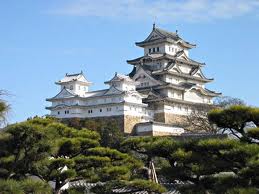 Himeji Castle, note the solid foundation for strength in earthquakes and the less ridged upper works for flexibility.
 Sunrise over Mount Fujiyama
 Sacred Mount Fujiyama has been a important fixture in the Shinto religion since the latter's creation.
 The Crest of Chrysanthemum is the Imperial Seal of Nippon.
 The full armor of a samurai was both functional and a statement of wealth. The two swords were the mark of the samuari and restricted to only members of the samuari class.
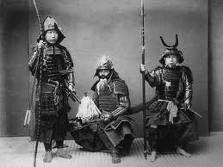 These three samurai show both the traditional armour and weapons of their class.


