Flavius Valerius Aurelius Constantinus Augustus, Emperor of Rome 306-337 CE. died of natural causes at the age of 65. Last of the great "Roman Emperors." He is famous for shoring up much of the strength of the Empire, accepting Christianity as the leading religion of the Empire and moving the capital further East to what he called "New Rome" (Constantinople). The acceptance of the growth and power of the Christian Religion was to have enormous Social ramifications for the history of Europe and the rest of the World. While the choice of his new capital, closer to the Eastern threats to the Empire as well as its greatest wealth, would lay the foundations for the survival (through the as yet unborn Eastern Roman Empire) of Roman technology and knowledge well into the 15th century.
The city of Constantine, Constantinople (Modern Day Istanbul), ancient Greek city of Byzantium, rebuilt (circa 330 CE) with a new name and destiny as the new capital of the Roman Empire. Protected on three sides by the sea and on land by the greatest city walls ever constructed, Constantinople would rule first the Roman World and then the Eastern Roman Empire (also known as the Byzantine Empire) for more than a thousand years, until its fall to the Ottoman Empire in 1453 CE.
Showing posts with label Caesar. Show all posts
Tuesday, October 22, 2013
Friday, October 15, 2010
Nerva–Antonine Dynasty, Rome at the Height of its Power: Five Good Emperors then Commodus
The Five Good Emperors were not the last great Roman Emperors, but they did represent the longest period of solid good leadership and took Rome to its Greatest Power. The Pax Romana allowed the people of the Empire the peace and security of a Roman Golden Age. But nothing lasts forever-even Golden Ages- by the time of Marcus Aurellus the first cracks began to appear. These weaknesses were accelerated by the disastrous leadership of Commodus!
Nerva, the old Senator turned Emperor, put Roman Government and the Imperium back on track with the renewed concept of choosing the best man as his successor (Adoptive Succession), adopting and training them for the task of leadership. Chose Trajan as his successor and son. Nerva was Emperor from 96-98 CE, died of old age when he was sixty-eight.
Trajan was a warrior first and emperor second. He is often thought to be the the greatest emperor after Augustus. Trajan increased the Empire to its greatest extent, produced a governmental surplus and was the model of the Roman ideals of virtue, dignity and military prowess. Emperor from 98-117 CE, he died of natural causes at the age of sixty-four.
Hadrian (Imperator Caesar Traianus Hadrianus Augustus) believed in consolidation not expansion. He redrew the Empires boundaries to more defensible borders such as the Rhine River. One of the great builders of Rome, three of his structures are still visible today-Hadrian's Wall, Hadrian's Tomb (current Castle St. Angelo) and the Pantheon. Emperor from 117-138 CE, he died of disease when he was sixty-two.
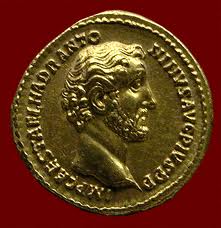
Antoninus Pius was a career politician not a warrior. A fiscal conservative, he spent his reign strengthening the Empire through negotiation rather than warfare. Taxation was fair, business booming, and the Empire was at peace. He was a popular Emperor among the people, the patricians and most importantly the legions (a most unusual occurrence). His reign is considered the high-water point of Imperial Rome. Events beyond anyone's imagination or control were about to challenge and change the Empire forever. Emperor from 138-161 CE, he died of natural causes at the age of seventy-five.
Marcus Aurelus, last of the Five Good Emperors, was a scholar by desire and a warrior emperor by necessity as the barbarian threat was greater in his reign than it had been since the age of Julius Caesar. The constant military campaigning and waves of barbarians brought and even greater danger to Rome, one for which there was no defense-the plague. Roman medical science was powerless in the face of this invisible killer, hundreds of thousands died (a fraction of the tens of millions killed when the plague revisited Europe during the reign of the Barbarian Kingdoms descended from the destroyers of the Roman Empire). Aurelus was on the final campaign to conquer Germania Magna when he died of the disease at the age of fifty-nine, he had been Emperor from 161-180.
“For our history now descends from a kingdom of gold to one of iron and rust.” Was how the Roman historian Cassius Dio saw the death of Marcus Aurelius-the collapse of Rome had begun.
Commodus was the actual son of Marcus Aurelus and was definitely not the right man for the job. Instead of finishing the conquest of Germania he made a quick peace and returned with the army to Rome where he devoted his life to personal pleasures. His brutal reign saw the disintegration of the Imperial Adoptive Succession. The "Gladiator Emperor" thought himself a reborn Hercules and dressed accordingly. His strange behavior became to much for the Senate. Emperor from 180-192, he was murdered at the age of thirty-one by a gladiator in the pay of the Senate. The bad old days of choosing and "removing" emperors through murder and war had returned.
Nerva, the old Senator turned Emperor, put Roman Government and the Imperium back on track with the renewed concept of choosing the best man as his successor (Adoptive Succession), adopting and training them for the task of leadership. Chose Trajan as his successor and son. Nerva was Emperor from 96-98 CE, died of old age when he was sixty-eight.
Trajan was a warrior first and emperor second. He is often thought to be the the greatest emperor after Augustus. Trajan increased the Empire to its greatest extent, produced a governmental surplus and was the model of the Roman ideals of virtue, dignity and military prowess. Emperor from 98-117 CE, he died of natural causes at the age of sixty-four.
Hadrian (Imperator Caesar Traianus Hadrianus Augustus) believed in consolidation not expansion. He redrew the Empires boundaries to more defensible borders such as the Rhine River. One of the great builders of Rome, three of his structures are still visible today-Hadrian's Wall, Hadrian's Tomb (current Castle St. Angelo) and the Pantheon. Emperor from 117-138 CE, he died of disease when he was sixty-two.
Antoninus Pius was a career politician not a warrior. A fiscal conservative, he spent his reign strengthening the Empire through negotiation rather than warfare. Taxation was fair, business booming, and the Empire was at peace. He was a popular Emperor among the people, the patricians and most importantly the legions (a most unusual occurrence). His reign is considered the high-water point of Imperial Rome. Events beyond anyone's imagination or control were about to challenge and change the Empire forever. Emperor from 138-161 CE, he died of natural causes at the age of seventy-five.
Marcus Aurelus, last of the Five Good Emperors, was a scholar by desire and a warrior emperor by necessity as the barbarian threat was greater in his reign than it had been since the age of Julius Caesar. The constant military campaigning and waves of barbarians brought and even greater danger to Rome, one for which there was no defense-the plague. Roman medical science was powerless in the face of this invisible killer, hundreds of thousands died (a fraction of the tens of millions killed when the plague revisited Europe during the reign of the Barbarian Kingdoms descended from the destroyers of the Roman Empire). Aurelus was on the final campaign to conquer Germania Magna when he died of the disease at the age of fifty-nine, he had been Emperor from 161-180.
“For our history now descends from a kingdom of gold to one of iron and rust.” Was how the Roman historian Cassius Dio saw the death of Marcus Aurelius-the collapse of Rome had begun.
Commodus was the actual son of Marcus Aurelus and was definitely not the right man for the job. Instead of finishing the conquest of Germania he made a quick peace and returned with the army to Rome where he devoted his life to personal pleasures. His brutal reign saw the disintegration of the Imperial Adoptive Succession. The "Gladiator Emperor" thought himself a reborn Hercules and dressed accordingly. His strange behavior became to much for the Senate. Emperor from 180-192, he was murdered at the age of thirty-one by a gladiator in the pay of the Senate. The bad old days of choosing and "removing" emperors through murder and war had returned.
Thursday, October 14, 2010
Julio-Claudian Emperors-Worlds Most Famous Dysfunctional Family

Augustus-an excellent emperor, but bad luck to be his chosen successor or his child. Lucius Caesar, Gaius Caesar, Drusus Germanicus and Agrippa Postumus were all seen as possible successors and all died before Augustus, his only daughter was banished. Only his adopted son Tiberius (son of Livia, the last wife of Augustus) survived this honor. Augustus died of old age (or did he?). Emperor 27 BCE-14 CE

Tiberius-executed multiple family members for suspected treason as well as several thousand Roman citizens, was murdered by his adopted son. Emperor 14-37 CE

Gaius (Caligula) the first Mad Emperor-killed his adopted father (Tiberius) and his own adopted successor, Gemellus. Caligula was a brutal ruler whose paranoia led him to kill indiscriminately. Thousands were killed at his whim. He spent treasury money lavishly on personal pleasures to the point of bankrupting the Empire. He was murdered by his own guards. Emperor 37-41 CE

Claudius enjoyed gladiator games to excess, the first massive bloodletting games were instituted by him. He executed one wife, Messalina, and was poisoned by his next wife, Agrippina.
Emperor 41-54 CE

Nero-the emperor who wanted to be an actor. Emptied the treasury with his lavish lifestyle and his "Golden Palace." He poisoned his brother Britannicus (son of Claudius), had his mother Agrippina killed, executed his wife Octavia (daughter of Claudius) and murdered his pregnant wife Poppaea. After fourteen years of his bloody rulership, the Senate declared him an enemy of the state, Nero then committed suicide, he was only thirty years old. Emperor 54-68 CE
With Nero's death the Julio-Claudian dynasty died, there were no direct family members left they had exterminated themselves!
Monday, October 11, 2010
What Is In a Name

Emperor Augustus understood the power names held. Throughout his life he changed his names several times and added many titles. Born Gaius Octavius Thurinus, he belonged to an equestrian family, his father was a minor Senator- Gaius Octavius. To avoid confusion, the Young Gaius was often called Octavian. When his great uncle, Gaius Julius Caesar was murdered, Octavian was surprised to learn he had been adopted by Julius in the latter’s will. To honor his new father, and remind everyone of his new lineage, Octavian took the new name Gaius Julius Caesar as his official title.
After defeating Cleopatra VII and Marcus Antonius, Octavian took many new titles that proclaimed his power in the Roman World. These included:
Princeps' - First Citizen of Rome
Pater Patriae - Father of his country
Caesar 'divi filius' - son of the divine' after Julius was proclaimed a god
Augustus – Revered One
Imperium Proconsulare Maius - Consul for life
Tribunicia Potestas - Tribune for life
Imperator – Commander of the Army
Friday, October 8, 2010
Divine Augustus-First Emperor of Rome
By 27 BCE, Octavian controlled the government of the Empire and the loyalty of the Army. Learning from the mistakes of his adopted Father (Julius Caesar) he never proclaimed himself Dictator. Instead he ruled through the Senate and assemblies. This was a fine line of distinction where he always "asked" the Senators to vote and provide input on his laws and running the government. Before each vote he "advised" the Senators on his opinion on the case the Senators were voting on. The appearance was that the Senate was an active participant in the ruling of the Empire but in fact the power was totally in the hands of Octavian.
With a free hand he rebuilt Rome, enlarged and secured the Empires borders, redesigned the government and generally created the foundations of the Roman Empire that was to last for the next four centuries. The grateful Senate and people showered Octavian with titles, to the people he was the Augustus Imperator- the Revered Commander of the Army. The total power held by Augustus changed the government to that of a true Empire, the old Republic was now dead to the cheers of the populous! After his death Augustus, like his adopted father, he was elevated to divine by the will of the Senate and the people of Rome.Wednesday, October 6, 2010
Marcus Antonius-Caesar's Successor?
"Friends, Romans, Countrymen lend me your ears...I come to bury Caesar not to praise him." So begins one of the greatest interpretations of the speech (here Marlon Brando plays Anthony in Shakespeare's play) that put Marcus Antonius (Mark Anthony) on the road to joint rulership of Rome. With his moving speech, and control of Julius' legions, and after a brief conflict, he and Caesar's adopted son, Octavian, quickly seized control of the Roman Government.
After destroying their many enemies, Antonius and Octavian ruled Rome together. Coins were even minted with both their images to show how united they and the Empire were. Antonius even went so far as to marry Octavian's sister Octavia.
But peace was not to be. After taking control of the Eastern half of the Empire, Antonius fell under the spell of Cleopatra VII. They soon married, a great insult to Octavius, the people of Rome and Octavia. The couple had several children and proclaimed themselves living gods on Earth (on his coins Antonius called himself Amen the sun god, while Cleopatra VII was proclaimed the goddess Isis). Only one action could meet such disregard for Roman traditions and the dire threat to the Empire Antonius and his foreign queen posed, WAR!

But peace was not to be. After taking control of the Eastern half of the Empire, Antonius fell under the spell of Cleopatra VII. They soon married, a great insult to Octavius, the people of Rome and Octavia. The couple had several children and proclaimed themselves living gods on Earth (on his coins Antonius called himself Amen the sun god, while Cleopatra VII was proclaimed the goddess Isis). Only one action could meet such disregard for Roman traditions and the dire threat to the Empire Antonius and his foreign queen posed, WAR!

The war was basically settled with the overwhelming victory
by Octavian’s forces at the sea battle of Actium on the second of September, 31 BCE. The inspired leadership of Octavian’s General, Marcus Agrippa, was key to the victory. With their defeat, and no other options available, Cleopatra VII and Marcus Antonius chose death by suicide rather than to be captured by Octavian’s forces. With his victory, and the deaths of Cleopatra VII, Caesarion and Marcus Antonius, Octavian became the sole ruler of the Roman World. He would soon earn a new name from the grateful people of Rome-Augustus.
Tuesday, October 5, 2010
The Divine Julius-Last "Dictator" of Rome
After conquering Gaul, and invading both Britannia and Germania for fame and tribute, Julius Caesar turned his eyes towards the true prize-Rome.
army was a direct challenge to the power of the Senate, and his former ally, Pompey Magnus.
Pompey Magnus (Pompey the Great) had been a successful general with powerful allies in the Senate. He had also been Caesar's friend, ally and son-in-law. That all changed with the death of his wife, Julia, in childbirth. Now there was to be only war between Julius and Pompey. The winner would be the undisputed ruler of the "Republic" of Rome and her Empire.
After a short but bloody civil war, the winner was Julius Caesar.
Julius then set out remaking the Roman Government with the popular support of the army and the common citizens. He was proclaimed "Dictator for Life" by a happy populace. This angered the powerful Senators who feared that in all but name Julius Caesar would be "King of Rome."
Pompey Magnus (Pompey the Great) had been a successful general with powerful allies in the Senate. He had also been Caesar's friend, ally and son-in-law. That all changed with the death of his wife, Julia, in childbirth. Now there was to be only war between Julius and Pompey. The winner would be the undisputed ruler of the "Republic" of Rome and her Empire.
After a short but bloody civil war, the winner was Julius Caesar.
Julius then set out remaking the Roman Government with the popular support of the army and the common citizens. He was proclaimed "Dictator for Life" by a happy populace. This angered the powerful Senators who feared that in all but name Julius Caesar would be "King of Rome." No king had ruled in Rome since the founding of the Republic centuries before and the Senate would not allow a king by any name to rule Rome!
The solution was clear-the only way to remove a "Dictator for Life"-give him death. Julius died at the hands of the Senators and at the feet of the statue to Pompey Magnus dedicated when the latter was the hero of Rome.
In the end Caesar defeated even death in the eyes of his people. So popular was his memory and family that his killers were hunted and destroyed and Julius Caesar was proclaimed "Divine." Temples were dedicated to the god Julius by the people of Rome. His adopted son Octavian would not repeat the mistake of becoming Dictator for Life, he would take a new title-Imperator (Emperor).
The solution was clear-the only way to remove a "Dictator for Life"-give him death. Julius died at the hands of the Senators and at the feet of the statue to Pompey Magnus dedicated when the latter was the hero of Rome.
In the end Caesar defeated even death in the eyes of his people. So popular was his memory and family that his killers were hunted and destroyed and Julius Caesar was proclaimed "Divine." Temples were dedicated to the god Julius by the people of Rome. His adopted son Octavian would not repeat the mistake of becoming Dictator for Life, he would take a new title-Imperator (Emperor).Monday, October 4, 2010
Cleopatra VII-Caesar's Bane

Julius Caesar and Cleopatra VII, queen of the Greek Ptolemaic Kingdom of Egypt, are the true stuff of legends, as countless Hollywood and television productions (here the 1950's, Claude Rains and Vivien Leigh version) have told their audiences.
Cleopatra VII is always beautiful, seductive and ruthless in these versions (Liz Taylor is this movie reincarnation). In reality Cleopatra did have a way of turning men into her willing aides. Julius was very smitten with her to the point of ignoring his wife and Roman traditions dealing with relationships with non-Roman women. When she claimed her child, Caesarion, was in fact the son of Caesar many of Rome's Patrician Senators were disgusted. This alienated more Senators from Caesar and added fuel to the fire that Caesar was no longer a true Republican of Rome. It was feared Caesar would marry the Queen of Egypt-that would make him a "King," the type of ruler the Senators most despised. The loss of Senate support was to have fatal consequences for Julius.

The actual Cleopatra VII was uncommonly pretty in her youth according to most sources and the limited physical evidence such as statues and wall carvings. She did use all her abilities, including her body, to attain her goals; the rulership of Egypt and maintaining Egypt's power in the Ancient World.

But after multiple children, the stress of leadership (including a civil war, murdering at least two brothers two sisters and consistent hostilities with Rome) and age began to tell. Her visage on coins of the time show her as much more "mature" queen.

Cleopatra VII was the last independent ruler of Egypt until the mid-20th century. Her attempts to keep Egypt independent of Rome through her very personal relationships with, first Julius Caesar and later Mark Anthony, were in the end futile and lead to her death and the fall of her kingdom to Octavian and the Romans in 30 BCE.
Monday, September 27, 2010
Gaul-the Enemy of Caesar


>This map shows Caesar's campaign against the Gauls and his major battles.
Since the 4th century BCE, the Romans had faced the dangers of invasion by the fierce tribes of the Gaul's. In fact, Rome itself was pillaged by the Gaul's under Brennus in 387 BCE (although it would be more than seven centuries before another barbarian army was able to accomplish this feat-the Visigoths of Alaric in 410 CE). By the 1st century BCE, the Romans were in a position to finish the question of Gaul. From 58 to 51 BCE, Julius Caesar waged a war of conquest against the "Barbarian Gaul's" and neighboring tribes. To the Romans this entire area was Gallia, just another area to be added as a province of the Empire. The Gaul's did not see themselves as "barbarians." They believed the Romans were invaders determined to conquer and enslave the people of Gaul.
The warriors of Gaul were brave but poorly trained and equipped. As in many barbarian societies, each man brought his own equipment to war. In many cases this was little more than a shield and sword or spear. Chieftains, as was appropriate to their rank and wealth, were the best equipped often with metal armour and higher quality weapons.

Roman soldiers were equipped by the state with high quality weapons and armor and were professionally trained. A Roman legion would include a medical detachment, combat engineers, transportation units and most importantly a highly developed officer corps and chain of command. Romans fought as a well-organized fighting machine; barbarians usually fought as a large mob.

It was not uncommon for some Gallic warriors to charge into combat without clothing. This was to impress their enemies with the bravery of the warrior and sow fear into the ranks of the enemy by the fanatic nature of these warriors of Gaul.
In the end, Roman military might and organization, under the leadership of Julius Caesar, overcame the strength of numbers the Gaul's held. Caesar used his victories to improve his fame and popularity with the people of Rome through his self-promoting book "Commentarii de Bello Gallico" (Commentaries on the Gallic War). Gaul some became an important province of the expanding Empire and remained so until the Fall of the Western Empire in the 5th Century CE.
Subscribe to:
Posts (Atom)


