Showing posts with label 2nd Century BCE. Show all posts

Wednesday, July 28, 2021

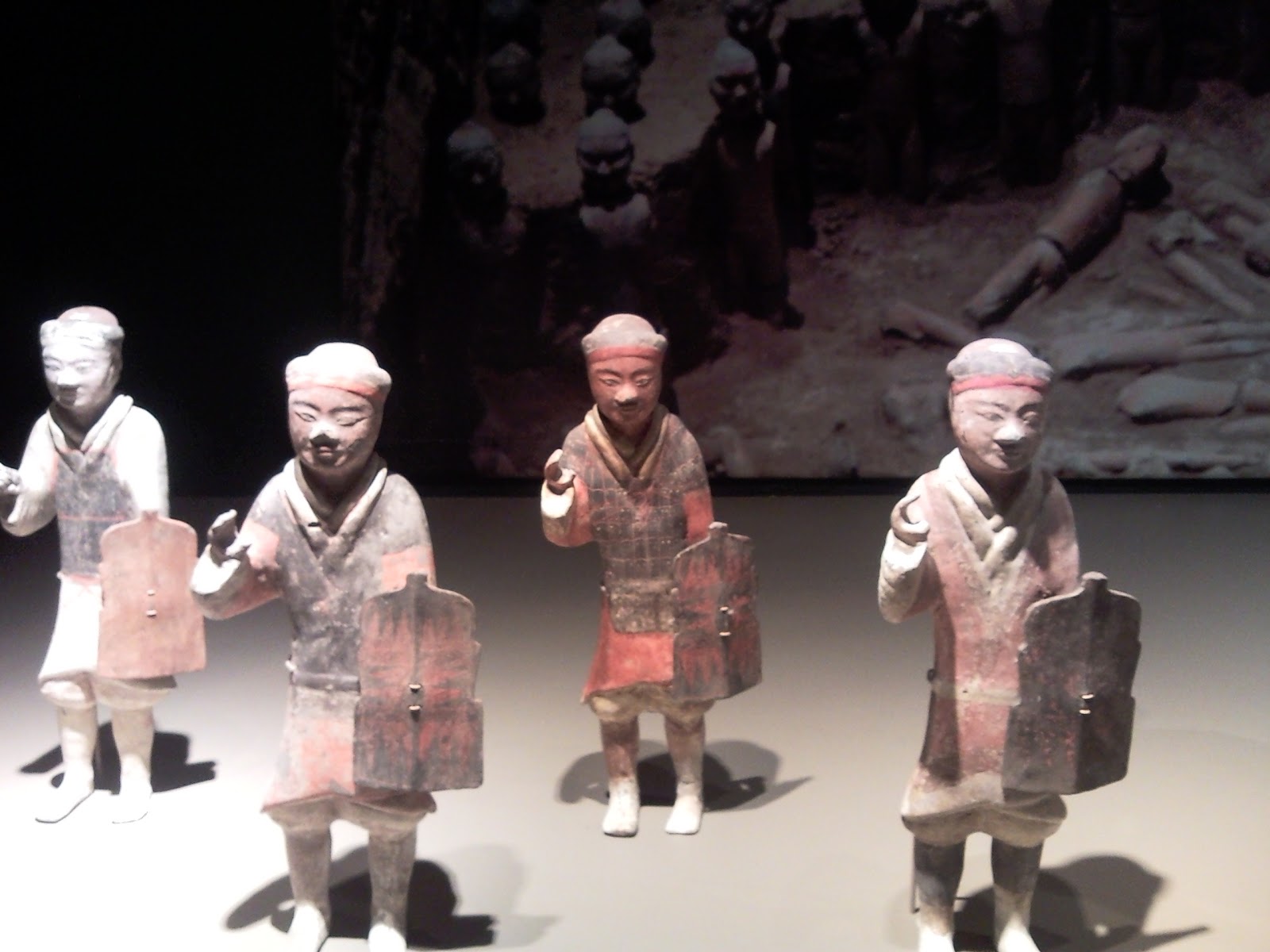
Han Tomb Guards


More than 20 centuries old, these Han warriors were at one time protectors of the tombs of the Han emperors.  They are baked ceramic and are from a Chinese touring exhibition at the Bowers Museum.

Warrior Guards of Qin


Warriors of Qin

Ranks of 1/3rd scale warriors of Qin (Ch'in for those over 50) Shi Huang di stand in the positions their full-scale brethren occupied as they guarded the tomb of their emperor.  Qin Shi Huang di was the 1st Emperor of China and to protect his tomb he ordered more than 7000 life-size terra-cotta warriors created.  These copies are located at the China pavilion in Epcot Center in Walt Disney World.

Tuesday, February 5, 2013

Guardians of the Han Dynasty


Unlike their full-size cousins of the Qin Dynasty, the warrior guardians of the tombs of the rulers of the Han Dynasty are less than 1/8 life size.

Warriors of Shi Huang di

During the reign of the First Emperor of China, Shi Huang di, circa 220 BCE, an army of life size warriors were created to protect the emperor's fantastic tomb.


Since their discovery in the 1970's, the Terra Cota Warriors of the Qin (Ch'in) Dynasty have ignited the imagination of historians and layman alike throughout the World.

Monday, November 12, 2012

Hannibal of Carthage

In 247 BCE, the year before the start of the 1st Punic War a son was born to Carthaginian general Hamilcar Barca, the proud father named his young boy...Hannibal.  In the wake of Carthages' loss to Rome in the 1st Punic War, Hamilcar with his young son, set the groundwork preparing for the next war by establishing Carthaginian control over much of the rich province of Spain. At the age of twenty-six, Hannibal took control of the Carthagian forces in Spain and readied for war with Rome. In 219 BCE, he judged the time was ripe and lured the Romans into war by attacking and looting one of their client city states-Saguntum. The decisive conflict between Roma and Carthage for supremacy of the Mediterranean had begun-the 2nd Punic War.

From 218-209 BCE, Hannibal's brilliant tactics out maneuvered the Romans and brought the Republic nearly to its knees.  His passage through the Alps and massive defeats of the famed Roman Legions at the battles of Trebia, Lake Trasimene and Cannae (where the Roman Army of over 85,000 was virtually annihilated) are still studied by historians and military experts today.  Yet with all his victories the Romans continued to thwart Hannibal's goal of total victory.  New armies were raised, improved tactics were installed (including the "Fabian Strategy" where attrition not pitched battles wore the forces of the enemy down), better generals were chosen, and the war was taken to the shores of Africa by the Romans.

In his last great battle, at Zama in 202 BCE, Hannibal was finally defeated by a Roman General, Publius Cornelius Scipio Africanus. Forced to abandon the Carthage he loved, Hannibal fled to the perceived safety of the Eastern Kingdoms, but the long arm of Rome followed him and circa 183 BCE, one of the greatest military leaders in history died by his own hands rather than be taken prisoner by his hated enemies the Romans.  He had failed to save Carthage (which would be totally destroyed by Rome in 146 BCE), but through his greatness he earned immortality for himself and the memory of his once great nation.
 

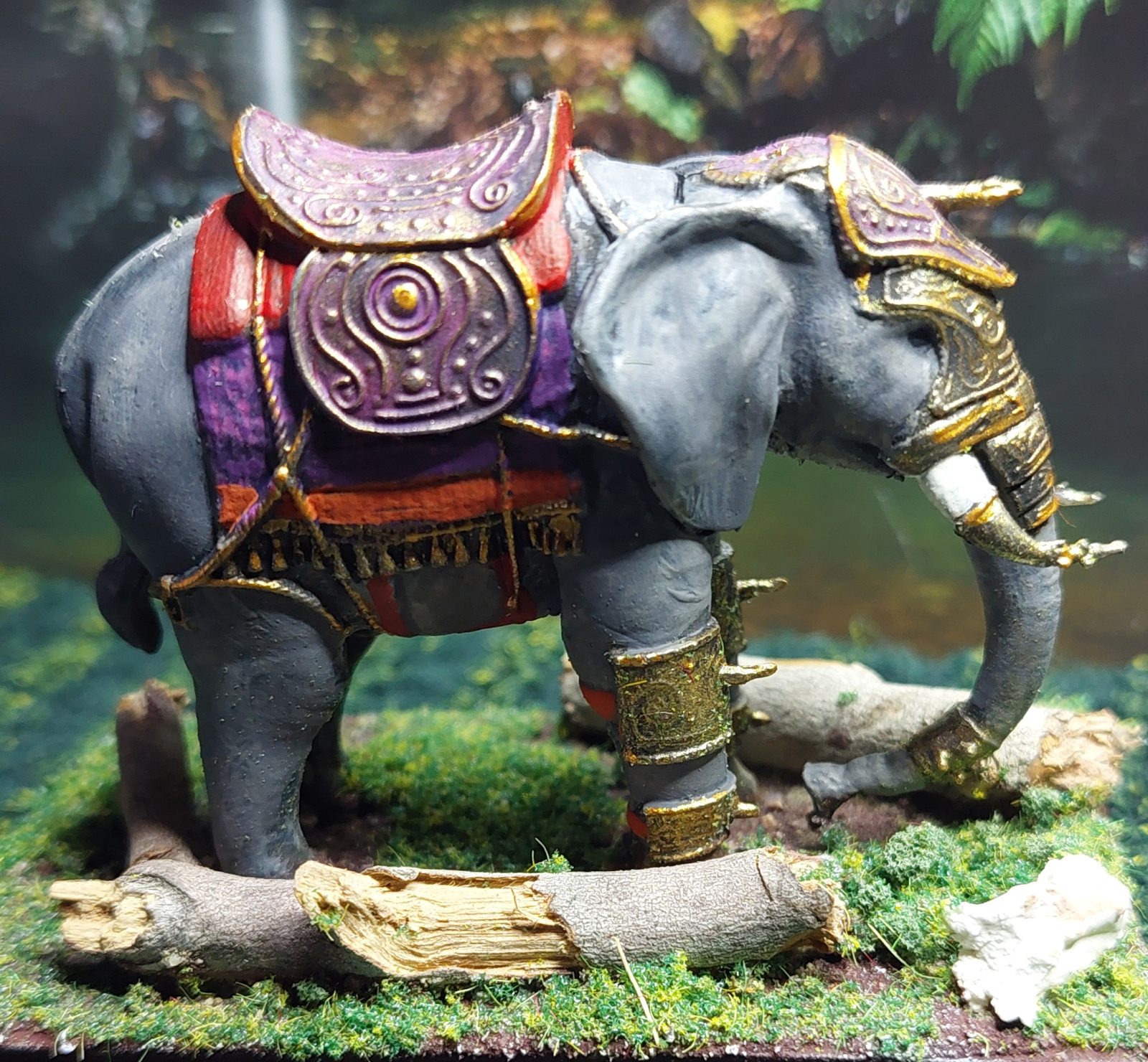
As a North African general Hannibal used war-elephants in his army.  One of his many feats was to not only cross the Alps into Italy with his army, but he was also able to bring some African war-elephants through the frozen passes. Unfortunately, most of the animals perished before any major battles with the Romans so their military contribution was nil. 

This is a plastic model I painted in 2022.

Wednesday, October 3, 2012

"Carthage Must Die"

For more than a century the two greatest powers of the Western Mediterranean Sea, Rome and Carthage competed for supremacy.  Three brutal wars were fought between the two powers, the 1st Punic War (246-241 BCE), the 2nd Punic War (218-201 BCE) and the final, 3rd Punic War (149-146 BCE). 

In the 1st Punic War (Punic came from Punicus, the Latin word for Phoenicians as the Carthaginians were called by the Romans.) was a victory for Rome who won her first overseas province, Sicily, the beginning of the Roman Empire.  In the 2nd Punic War, Rome overcame several massive defeats at the hands of the Great Carthaginian General Hannibal and again defeated the Carthaginians. 

During the uneasy peace after the 2nd Punic War many Romans felt the only lasting solution to the War many dangers of Carthage was the total destruction of the city.  The great Roman senator, Cato the Elder, expressed this deep hatred through his famous comment "Carthago delenda est," ("Carthage must be Destroyed") that he added to the end of every speech he made in the Senate.  The death of Carthage came in the 3rd Punic War, where 80% of her population died, the rest were sold into slavery, the city was burned to the ground, the soil plowed with salt and the land cursed (the Romans really hated Carthage).  With her greatest rival destroyed, Rome was now the sole major power in the West and well on the road to becoming one of the greatest Empires in World History.