Showing posts with label England. Show all posts

Sunday, June 20, 2021

"Pinkie and The Blue Boy"

"Pinkie" the 1794, painting by English master Thomas Lawrence of 11-year-old Sarah Goodin Barret Moulton (22 March 1783b. - 23 April 1795d.) When first presented in the 1795 Royal Academy Summer Exhibition (ironically, the day after Sarah died) the work was proclaimed a masterpiece by the judges.
The captivating grace of young Sarah Goodin Barrett Moulton is as evident to today's views as it was more than 2 and a quarter centuries ago.

Since the 1920''s Pinkies constant companion has been the circa 1770, Thomas Gainsborough masterpiece "The Blue Boy." Thought to be Jonathan Buttle (1752b.–1805d.), but as is the case with many great works of art, the truth of who The Blue Boy really was will never be known. What is known is ever since the "Railroad Barron" Henry Huntington bought the painting, for the then record price of $728,800 (over $10,000,000 today), The Blue Boy and Pinkie have been as inseparable as the most beloved brother and sister.

Residing in the Huntington Library and Gardens in San Marino, California, Pinkie and The Blue Boy have and will continue to enthrall those who have the good fortune to visit them. 
Sunday, September 1, 2019

1066-the year of the "Conqueror"

In 1066 C.E., after the death of King Edward the Confessor, the throne of England was claimed by three powerful men, Earl Harold Godwinson of Wessex, King Harald Hardrada of Norway and Duke William II of Normandy.  While each of these men felt justified in claiming the rightful kingship of England, it was Harold Godwinson who was first to succeed in being crowned king in January 1066.  In response, both King Harald and Duke William II made plans to invade England and take the crown by force of arms. In September, at the Battle of Samford Bridge near the city of York, the English Army under King Harold killed Harald and destroyed most of his Viking army.

With one claimant to the throne dead, it now William's time to make his try for the crown of England. After successfully crossing the English Channel with an army in excess of 8,000 men (some estimates range up to over 12,000 warriors) of which around half were mounted, armored "shock troops," William was ready to throw the die of battle with the stakes being the rulership of England. In face of this crisis, King Harold had rushed with his troops from Northern England to face the second invasion of his realm in less than two months and prepared for battle with an enemy army that probably heavily outnumbered his own (the numbers of his troops are unknown but are most often estimated to be well below 10,000 and contained very few cavalry).  So, it occurred that on 14 October 1066, the bloody Battle of Hastings decided the fate of the rulership of England.  The English had formed a traditional shield wall defensive formation atop a sloping hillock where they were able to resist multiple Norman charges for most of the day.  Late in the day, in the confusion of battle the Normans wavered when it was thought William had been killed, nothing could be further from the truth, William was alive and rallied his troops.  Rather it was Harold who was killed, and the English Army eventually overrun.

With the battle won England was to receive her third crowned king in less than a year, William I "the Conqueror." The new king now added England to his dukedom in France to become one of the most powerful leaders in late 12 century Western Europe. William I "the Conqueror" was a French nobleman, descendent of "Viking" Norsemen. He was born circa 1028 CE, was Duke of Normandy from 1035 to 1087 and King of England from 1066 to 1087. Queen Elizabeth II and the House of Windsor are direct descendants of William I. 

Monday, February 15, 2016

Deadly Poem


Ring-a-Ring o'Rosies
A Pocket full of Posies
"A-tishoo! A-tishoo!"
We all fall Down!


A simple children's nursery rhyme with a much more sinister (although some sources point to other interpretations) meaning-the massive deaths from the Bubonic Plagues of the 14th to 17 centuries. 

Ring-a-Ring o'Rosies: represented the blotches and sores of the disease. 
A Pocket full of Posies: was the attempt to ward off the disease by smelling fresh herbs and fragrant flowers to counter the "poisonous vapours." *
"A-tishoo! A-tishoo!": the sneezing that took hold of the victim's in the final stage of the disease.
We all fall Down!: the sick drop dead.

(or is it-Modern revisionists doubt the story while many Old English historians believe it)

Results of the "Black Death" in the 14th century Europe are estimated to be in excess of 25 million in less than five years (1347-1352).  Thus the plague killed a third of the European population in general and more than fifty percent of the people of many communities such as the City of Venice.  So many died that the entire economy and social systems of Europe were radically changed.  The individual was now more valuable as there was often a great shortage of labor. The plague would continue to revisit Europe for the next three hundred years. At its height in the outbreak of 1666, the pandemic was killing more than 5000 people a day just in London. The plague's last great Asian outbreak at the start of the 20th century killed over 10 million alone just in British Colonial India.  The disease is still found throughout the World today, but luckily for all it is treatable with modern medicine.

*The belief that sight and smells could carry and spread the disease led to another saying, "Seeing the World through rose-colored glasses."  Doctors and others would wear a mask that had rose colored glass eyepieces that they believed would prevent them from getting the disease.  As an added protection the nose of the mask would be filled with herbs and sweet flowers to defeat the deadly vapors.  The concept that deadly diseases such as Yellow Fever, Cholera, Malaria and the like were transmitted by "Deadly Vapors" lasted into the early 20th century.


Wednesday, March 6, 2013

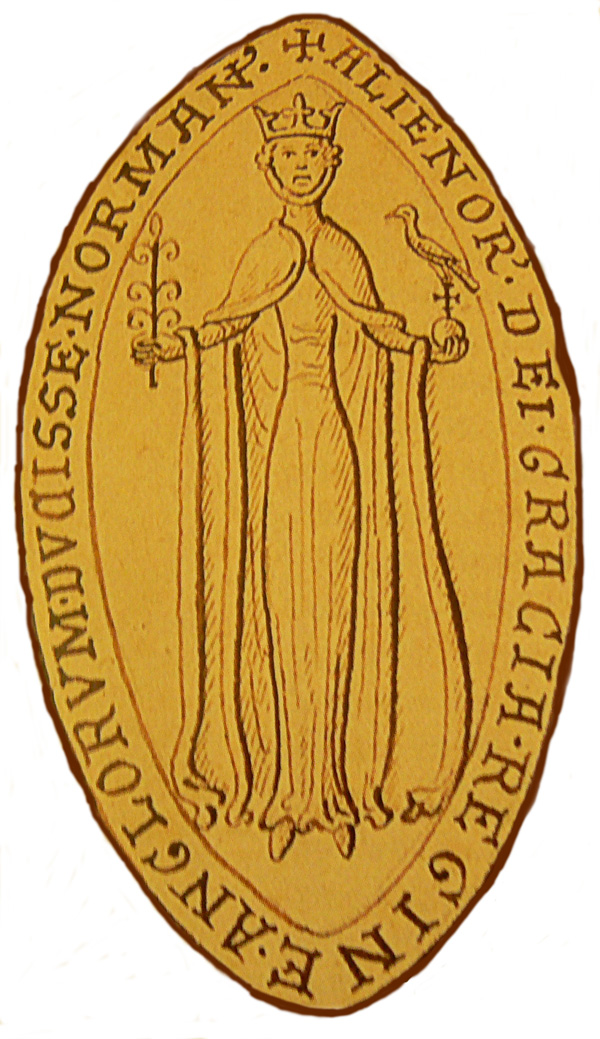
Eleanor of Aquitaine-Wife of Kings Mother of Kings most Powerful Woman of the Middle Ages

File:EleanorAkvitanie1068.jpg
Duchess of Aquitaine (1137-1204), Queen Consort of Louis VII of France (1137-1152), Queen Consort of Henry II of England and Duke of Normandy (1154-1189).  Born circa 1122 died 1204.
Unusual for her day, Eleanor was actively involved in politics from her youth to her death.  Be it ruling the largest Duchy in France, advising her royal husbands, arranging advantageous noble weddings, influencing her royal children or organizing military revolts against her second husband King Henry II, Eleanor was no man's tool.  Actually, she was very adept at making otherwise powerful men into her tools to forward her political agenda.  She was a unique woman of her age, politically astute, strong willed and immensely intelligent.
 
Mother of three kings of England: Henry the Young King (1170-1183), Richard I-Coeur de Lion (1189-1199) and John-Lackland (1199-1216)
Mother of two queens:  Eleanor Queen of Castile (1177-1214), and Joan Queen of Sicily (1177-1189)
For more details on her remarkable life check:
http://ehistory.osu.edu/world/PeopleView.cfm?PID=394
http://www.womeninworldhistory.com/heroine2.html

Thursday, February 23, 2012

War of the Roses

After the defeat of the English in the 100 Years War, thousands of warriors returned to England just in time to join in a family dispute as to which branch of the Plantagenet Dynasty-Lancaster or York-should rule England. This civil war has been called the War of the Roses due to the color of rose each family supposedly chose as its de facto emblem.

From 1455 to 1485 England was wracked by the horrors of Civil War, kings were made, deposed, reinstated, deposed again and out righted murdered in the quest for control of the throne.


The followers of the House of the Duke of Lancaster were those of the Red Rose.
While the followers of the House of the Duke of York choose the White Rose.


For a time, the powerful Richard Neville, 16th Earl of Warwick earned the title of "Kingmaker" during this war as he threw his support to different contenders.  At first, he supported the Lancastrian Henry VI (king from:1422-1461 and 1470-1471), then helped Edward IV of York (king from: 1461-1470 and 1471-1483) to the throne, after a falling out with Edward, he helped to put Henry VI back on the throne.  Before he could change sides again, he was killed in the Battle of Barnet in 1471, leaving Edward IV as king.

With the death of Edward IV, his young son Edward was proclaimed king, with his Uncle Richard, Duke of Gloucester as "Lord Protector" of the boy king. The murder of Edward V (13 years old) and his younger brother Richard, Duke of York in 1483, left their Uncle Richard as the sole surviving adult male of the line and therefore king (there was an 8-year-old nephew, Edward, son of Richard's executed younger brother George. Edward himself would be beheaded in 1499).

Richard III (1483-1485) was unpopular, thought to be the murderer of Edward V and a usurper. It did not take long for his enemies to form an army and challenge him for the crown.
In 1485, Henry Tudor, Earl of Richmond, defeated Richard III (who died in the fight) at the Battle of Bosworth Fields. Through his marriage to Elizabeth of York (daughter of Edward IV) and a distant claim of descendance from King Edward III (his mother was the great-great-granddaughter of Henry's younger son John), Henry VII of the House of Tudor is made King of England (1483-1509).
The Tudor Rose combines the Lancaster and York into one rose, one family and a new dynasty-the War of the Roses was over.

The Hundred Years War (the 117 Years War just doesn't sound right)


For more than a century (circa 1336-1453) England and France fought a ruinous series of conflicts (it was never one constant war-nor was there any true periods of total peace) over control of the land of France and the French crown.

Throughout the period the English and Welsh longbowmen were one of the key weapons in the English arsenal. With a range of up to 400 yards and the ability to fire up to six aimed shots a minute, the longbow was a fearsome weapon for the French to face.

In several battles (Crecy, Poitiers and Agincourt being the most famous) the smaller English army was able to overcome greater French numbers through superior tactics and the massive firepower of the longbow.

English King Henry V of the House of Plantagenet (1413-1422) was the most successful of the English kings in the war.  Through the Treaty of Troyes, he was even able to force French King Charles VI of the House Valois (1380-1422) to proclaim Henry the rightful heir to the throne (upon the death of Charles).  Unfortunately for the English, Henry died first (of dysentery) and the French voided the treaty.

In 1429, the teenage Maid of Orleans, Jeanne d'Arc (burned as a witch by the English in 1431), rallied the French Army and broke the English siege of Orleans. The Victory revised French spirits at a time when the English were politically divided.  The final phase of the war had now begun.
The final battles were more and more dominated by the latest in warfare weapons, gunpowder firearms and cannons. The days of heavily armored warriors were numbered as was English control of France. In the end, the two countries remained independent of each other, but the animosity of a century of war lead to more than a dozen major other wars between the two over the next four centuries, with the Seven Years, American Revolution and the Napoleonic Wars among the most important.

Tuesday, May 24, 2011

Early English Colonies

Before the arrival of the English most of the coastal Indians of the Massachusetts to Virgina area lived is small villages such as this.


Sir Walter Raleigh tried to establish a successful English colony in North America several times. All were failures, but he is credited with introducing smoking to the court of King James. James thought smoking was a vile, disgusting and unhealthy habit (he was a few centuries ahead of the times on this thought).

The establishment of the "Lost Colony of Roanoke" in 1587, was the most famous failure of the early English colonial attempts. Established on an island off the coast of modern-day North Carolina, Roanoke had the distinction of having the first European born in North America, Virginia Dare.


The last contact with the colonists was when their ship left for England in 1587, for needed supplies. The attack of the Spanish Armada delayed the return of the relief ship until 1590. What they found was that the 100+ colonists had disappeared, no sign of violence or struggle was found although much of the housing and fortifications of the colony had been dismantled. The only clue was the word "Croatan" carved on a tree post. Although both the English and the Spanish (the former to rescue the survivors and the latter to destroy the interlopers into land claimed by Spain) searched for additional clues to the colony's disappearance for many years, the mystery has never been solved to this day.

Jamestown-Virginia 1607, was the first successful English Colony in the New World. It was touch and go for several years but thanks to the strong leadership of Capt. John Smith and initial friendly relations with the local Powhatan Tribes the colony slowly grew.

The marriage of Pocahontas and John Rolfe was hoped to continue peaceful relations with the local Indians.


The peace failed with the death of Pocahontas' father, Chief Wahunsonacock (more commonly known as Chief Powhatan). Increased resentment between the colonists and Indians over cultural misunderstandings and land use rights lead to several small violent clashes. The final breach occurred in 1622, with the Jamestown Massacre, where 347 of the European colonists (25% of the Population) were killed and many captured by the Powhatan Indians under the leadership of Chief Opechancanough (the uncle of Pocahontas).

The true savior of the colony was the cash crop-tobacco. Aways a money maker, tobacco earned Virginia the title "the Colony Built on Smoke." After 1620, slaves began to take an ever increasingly prominent role in the raising and harvesting of tobacco in Virginia and in the future Southern colonies.


Plymouth Plantation in 1620, was established by religious discontents, the "Pilgrims" (also known as Separatists) and some adventurers from England.

Arriving on the Mayflower, the colonists were at first dismayed to learn that they were not in Virginia where their contract for settlement gave them a legal claim.


Upon their own authority the men of the colony wrote and signed the Mayflower Compact, establishing a "Body Politic" with equality for all. This action is seen as the beginnings of American independent thought that would lead to the Revolution and US Constitution.


The first Thanksgiving was a celebration of the first harvest in the new colony and the survival of the same.


After the English Civil War of the 17th Century, the new Government of Cromwell became interested in the Caribbean and its treasures. A series of attacks led to the capture of Jamaica from Spain by the English in 1655, by troops under General Robert Venables. The new English colony was an immediate money maker with its vast sugar plantations and as a haven for pirates and privateers raiding the rich seas of the Spanish Main.


The use of sugar plantation slaves in Jamaica like these was the norm throughout the Spanish, Dutch and English colonies on the islands of the Caribbean from Cuba to Grenada. Sugar was the major cash crop of the Caribbean colonies; and continues to be a major crop throughout this area to this very day.

Family crest of Sir George Calvert, Lord Baltimore, original sponsor and his son Sir Cecil, the founder of Maryland.

In the new colony of Maryland, the Act of Toleration in 1649, became the first law of religious toleration in the New World. This act was originally only for Christians that believed in the trinity of Father, Son and Holy Spirit, the concept was later expanded to all European and finally all religions that is now formalized in the 1st Amendment to the US Constitution.

Thursday, March 24, 2011

Elizabeth I- "Good Queen Bess"

Princess Elizabeth (1533-1558).
Coronation regalia of Queen Elizabeth I 1558-1603.
Her firm belief was that investing in industry, the sciences and arts would make here country stronger. She constantly strove to attain these goals throughout her reign. To her people, tired of the bloodshed rule of her predecessors, Elizabeth was a popular enlightened monarch. With much depth of feeling they took to calling her "Good Queen Bess."
She refused to have any man in a position of authority over her, so remained unmarried. This earned her the title "the Virgin Queen" (and yes Virginia was named after her due to this nickname).
The Golden Hind, the ship of Elizabeth's greatest "Sea Dog" (privateer)-Sir Francis Drake. This ship under Drake's command was the first English vessel to circumnavigate the globe, 1577-1580.
In response to the constant Sea Dog raids of his colonial fleets and possessions, Spanish King Philip II launched the Spanish Armada with the intention of landing an army of conquest in England in 1588. Tradition has it that the Queen Elizabeth appeared before her troops at Tilbury, giving a powerful speech to rally them for the coming battle. In her most famous line she said, "I know I have the body but of a weak and feeble woman; but I have the heart and stomach of a king, and of a king of England." Her strong leadership is often credited with assisting in the great military victory that followed.
The Spanish Armada Campaign was a decisive victory for the English. Virtually the entire Spanish fleet's combat ability was destroyed in action or by the storms that followed the survivors around the British Idles and back to Spain. For minimal loses, the English defeated the greatest power, and largest empire, of the day. Spain would send two more weaker armadas towards England, and both would suffer similar fates. Hence forth England's star would be ascending, while Spain's slowly fell from the heavens.
Elizabeth Tudor was one of the few people who have a period of time named after them. The Elizabethan Age today brings images of England at the height of Renaissance and a Golden Age of advances in the arts and sciences that would soon change the World. When she came to the throne of England, her country was a minor player in world affairs. She left England as one of the up-and-coming World Powers, a land of enlightenment making its first major steps on the road to become one of the greatest empires in all history.

Friday, February 11, 2011

Henry VIII the Reformation King

Henry VIII was a complex, powerful king. His firm belief in the superiority of the king over the Church lead to his break from Rome and the English Reformation. His founding of the Church of England was to have massive effects upon the history of the World.
After forming the Church of England (with the King as its leader), Henry was quick to realize the vast fortunes held by the numerous Catholic Abby's and Monasteries were his for the taking. The forced secularization, confiscation and ultimate destruction of these brought millions into the coffers of Henry and his favorite courtiers.
Henry loved to flaunt his wealth and power. How many gems and pearls can you count in this painting of the king?
In his younger days Henry was very athletic and enjoyed jousting. This is one of his suits of armor for the latter.
Henry was frantic to have a legitimate male heir. Here he his is seen with Edward the Prince of Wales and Edward's mother Jane Seymour. The interesting feature of this painting is that Jane died in childbirth with Edward-Henry really appreciated her sacrifice.
The Tudor Rose became a popular emblem and is still in use by the British Royalty.
Henry's need for and heir, greed and unfortunate choice in some women lead to his having six wives. Catherine of Aragon was his older brother Arthur's wife. Henry married her after Arthur (15 years old) died in 1502. Before their divorce, Henry and Catherine were married for 24 years with one surviving child-Mary. Next came the tragic Anne Boleyn, her three-year reign produced Elizabeth and cost Anne her head. Jane Seymour lasted a year and a half dying in childbirth giving Henry his only legitimate male heir-Edward. Anne of Cleves lasted half a year before the divorce. Catherine Howard lasted two years before her infidelity cost her and her lovers their heads. Catherine Parr (perhaps the luckiest of the lot) outlived the powerful king. In 1547, the once handsome and powerful man died an obese (his waist was over 54 inches) man, with gout, multiple pus-filled sores and with toes rotting from gangrene. Of his three heirs, two died after short reigns but Elizabeth I was to become one of the greatest monarchs in English History.

Sunday, February 6, 2011

When You want a real Palace You want Hampton Court


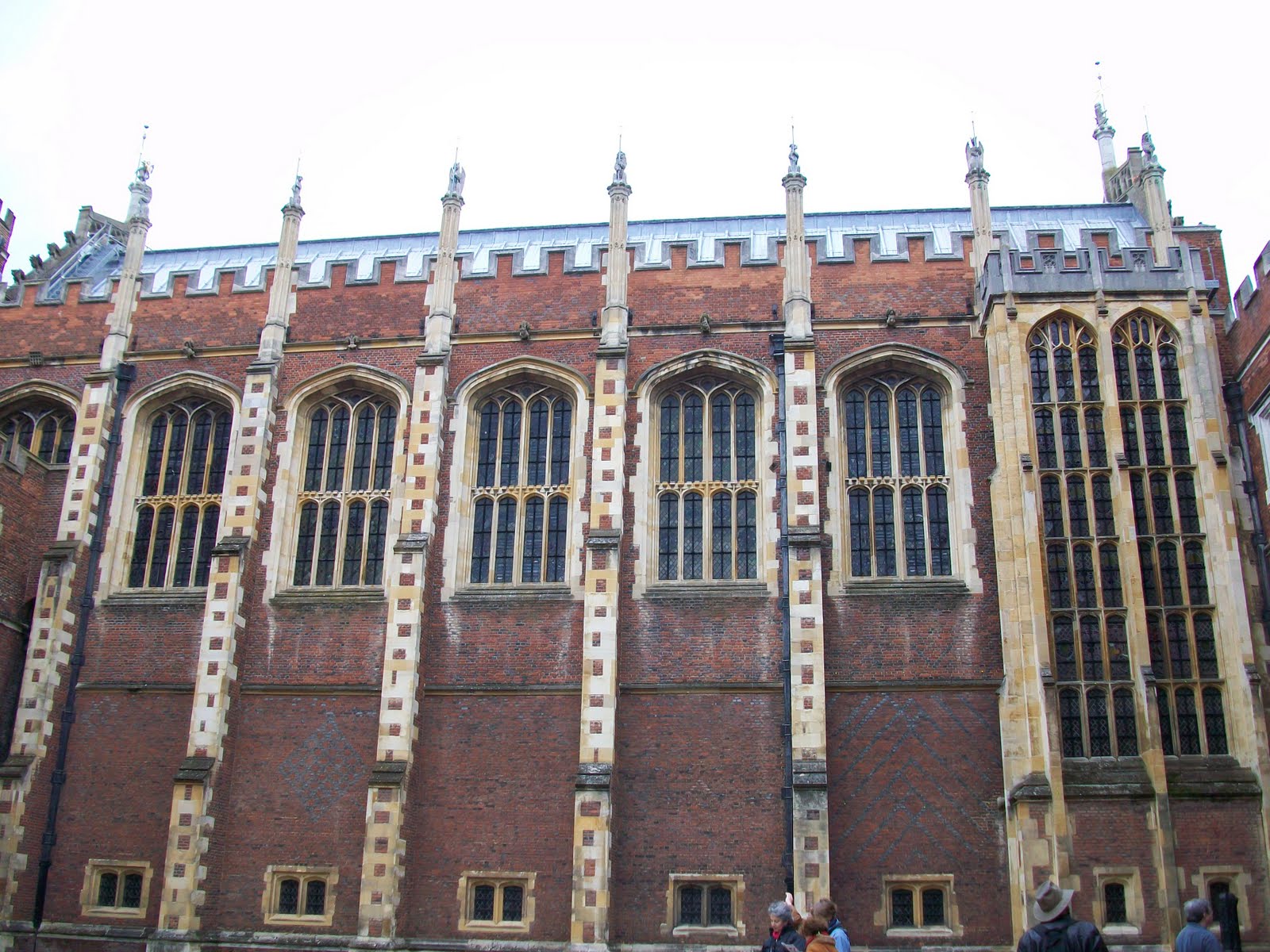
The great palace complex of Hampton Court, home to the kings and queens of England (and later the United Kingdom) for more than three centuries.


Built as a palace with comfort and luxury as its hallmarks, Hampton Court continued to expand over the centuries.


Stained glass windows of the highest quality proclaimed the power and glory of those who ruled from Hampton Court.


Henry VIII was the first king to live here, his visage has reminded countless generations of his power.


The Royal Court of Arms of the House of Tudor.


Time and tides wait for no man, so the clock at Hampton Court tells both-the better for the royal family to travel the river to London Town.