Showing posts with label Middle Ages. Show all posts
Saturday, July 30, 2022
Norseman Raider-that's Viking to You
The dreaded cry the "Vikings are coming" was enough to empty any Middle Ages village of its inhabitants as they took to countryside to escape the terrible raiders. For hundreds of years these fearsome men for the North plundered the coast lines of Europe.
But this Norseman, Karl Karlson, could have told their victims that "Viking" was not a nationality-it was a job description. To go "Viking" meant to go raiding. These "Viking"" raiders could be Norse (Northmen /Normans), Swedes, Danes or Friesians but none were from a land called Viking.Karl here is a plastic piece that I painted in 2021.
Sunday, September 1, 2019
1066-the year of the "Conqueror"
In 1066 C.E., after the death of King Edward the Confessor, the throne of England was claimed by three powerful men, Earl Harold Godwinson of Wessex, King Harald Hardrada of Norway and Duke William II of Normandy. While each of these men felt justified in claiming the rightful kingship of England, it was Harold Godwinson who was first to succeed in being crowned king in January 1066. In response, both King Harald and Duke William II made plans to invade England and take the crown by force of arms. In September, at the Battle of Samford Bridge near the city of York, the English Army under King Harold killed Harald and destroyed most of his Viking army.
With one claimant to the throne dead, it now William's time to make his try for the crown of England. After successfully crossing the English Channel with an army in excess of 8,000 men (some estimates range up to over 12,000 warriors) of which around half were mounted, armored "shock troops," William was ready to throw the die of battle with the stakes being the rulership of England. In face of this crisis, King Harold had rushed with his troops from Northern England to face the second invasion of his realm in less than two months and prepared for battle with an enemy army that probably heavily outnumbered his own (the numbers of his troops are unknown but are most often estimated to be well below 10,000 and contained very few cavalry). So, it occurred that on 14 October 1066, the bloody Battle of Hastings decided the fate of the rulership of England. The English had formed a traditional shield wall defensive formation atop a sloping hillock where they were able to resist multiple Norman charges for most of the day. Late in the day, in the confusion of battle the Normans wavered when it was thought William had been killed, nothing could be further from the truth, William was alive and rallied his troops. Rather it was Harold who was killed, and the English Army eventually overrun.
With the battle won England was to receive her third crowned king in less than a year, William I "the Conqueror." The new king now added England to his dukedom in France to become one of the most powerful leaders in late 12 century Western Europe. William I "the Conqueror" was a French nobleman, descendent of "Viking" Norsemen. He was born circa 1028 CE, was Duke of Normandy from 1035 to 1087 and King of England from 1066 to 1087. Queen Elizabeth II and the House of Windsor are direct descendants of William I.
With one claimant to the throne dead, it now William's time to make his try for the crown of England. After successfully crossing the English Channel with an army in excess of 8,000 men (some estimates range up to over 12,000 warriors) of which around half were mounted, armored "shock troops," William was ready to throw the die of battle with the stakes being the rulership of England. In face of this crisis, King Harold had rushed with his troops from Northern England to face the second invasion of his realm in less than two months and prepared for battle with an enemy army that probably heavily outnumbered his own (the numbers of his troops are unknown but are most often estimated to be well below 10,000 and contained very few cavalry). So, it occurred that on 14 October 1066, the bloody Battle of Hastings decided the fate of the rulership of England. The English had formed a traditional shield wall defensive formation atop a sloping hillock where they were able to resist multiple Norman charges for most of the day. Late in the day, in the confusion of battle the Normans wavered when it was thought William had been killed, nothing could be further from the truth, William was alive and rallied his troops. Rather it was Harold who was killed, and the English Army eventually overrun.
With the battle won England was to receive her third crowned king in less than a year, William I "the Conqueror." The new king now added England to his dukedom in France to become one of the most powerful leaders in late 12 century Western Europe. William I "the Conqueror" was a French nobleman, descendent of "Viking" Norsemen. He was born circa 1028 CE, was Duke of Normandy from 1035 to 1087 and King of England from 1066 to 1087. Queen Elizabeth II and the House of Windsor are direct descendants of William I.
Friday, January 13, 2017
A well-trained knight was a skilled killing machine
adept at the strengths and proper usage of the most common weapons of the
time. In the Middle Ages these could
include weapons for bashing and smashing such as the mace, flail, morning-star;
for cutting, and slicing the hand axe, battle-axe and halberd were preferred;
when cutting and stabbing were called for the dagger, one handed sword, hand and
a half bastard sword and the massive two-handed sword were the most commonly
used. All knights were trained in the
use of the lance for mounted combat, and most could shoot the crossbow or
bow. All these weapons took years of practice
to master and most knights practiced as if their lives depended upon it, as it
would in real combat.
When it came to armor, a knight could always be
counted on to purchase the best they could afford. The poorest knights might be forced to use quilted,
Brigantine or at worst hardened leather.
Those with more means would wear scalemail, chainmail or chain and plate
while the wealthiest would have the best protection by using full plate.
Thursday, February 18, 2016
Death to the Middle Ages Knights
This early style handgun was the beginning of the end for the heavily armored knights. It was fairly simple to use, somewhat inexpensive to produce and deadly at close range. A hit would punch through most armor, giving common infantry a deadly way to deal with expensive knights. Cheap and fast to learn (hand gunners could be trained in weeks vs the five or more years it took to train a longbowman) were added bonuses. Soon armies would begin to rely on improved matchlocks that would take control of the battlefield.
This heavier "hand cannon" gave the Middle Ages infantry brutal killing power, at close range. The dawning of the age of gunpowder was at hand. Warfare would never be the same.
Wednesday, March 6, 2013
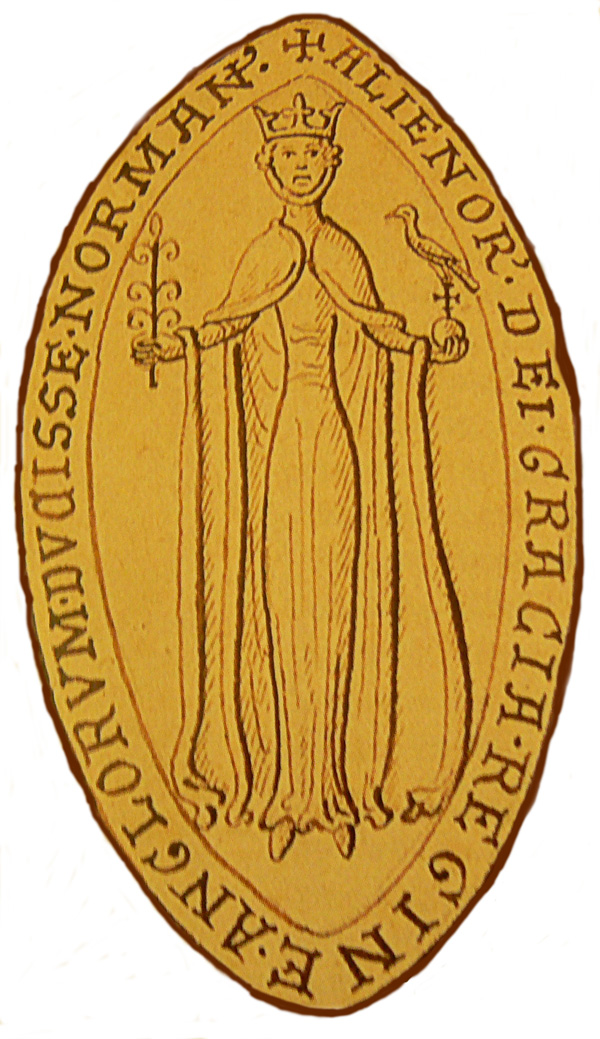
Eleanor of Aquitaine-Wife of Kings Mother of Kings most Powerful Woman of the Middle Ages
Duchess of Aquitaine (1137-1204), Queen Consort of Louis VII of France (1137-1152), Queen Consort of Henry II of England and Duke of Normandy (1154-1189). Born circa 1122 died 1204.
Unusual for her day, Eleanor was actively involved in politics from her youth to her death. Be it ruling the largest Duchy in France, advising her royal husbands, arranging advantageous noble weddings, influencing her royal children or organizing military revolts against her second husband King Henry II, Eleanor was no man's tool. Actually, she was very adept at making otherwise powerful men into her tools to forward her political agenda. She was a unique woman of her age, politically astute, strong willed and immensely intelligent.
Mother of three kings of England: Henry the Young King (1170-1183), Richard I-Coeur de Lion (1189-1199) and John-Lackland (1199-1216)
Mother of two queens: Eleanor Queen of Castile (1177-1214), and Joan Queen of Sicily (1177-1189)
For more details on her remarkable life check:
http://ehistory.osu.edu/world/PeopleView.cfm?PID=394http://www.womeninworldhistory.com/heroine2.html
Wednesday, February 20, 2013
Bleeding-Medieval Medicine at its Worst
Bleeding (or bloodletting) was the most common medical treatment of the Middle Ages; it was also 100% worthless! The basic idea of the day was that by removing blood from an ill person the body would produce new blood that was "untainted" by illness and the victim-patient would soon be cured. Needless to say, the procedure did little more than to make the person weaker and faint. Bleeding was so ingrained into medical thinking; it was still being practiced by doctors in the 1860's.
An interesting side fact is that in the Middle Ages the village barber was also the main man to go to to be bled as the barber had the sharpest knives needed to cut the veins. The now traditional red and white poles outside of barber shops are said to have come from the way the barbers would place their blood-stained towels outside to dry after a successful bleeding.
Thursday, February 14, 2013
Castles can be really Big
The Ludlow castle town side main gate, as the town was protected by its own walls, this castle entry was smaller than those of many other castles.
Barracks across the bailey.
One of the great halls.
the other side of the bailey with an outer wall tower.
The moat, a daunting defense for attackers to cross.
The view of the main gate from the moat...
it's a long way up.
Wednesday, February 6, 2013
Feudalism-Military Government on the Cheap
Feudalism was the dominant Social/Political system in Europe during the Middle Ages (circa 9th to 16 centuries but still in use in many countries well into the 19th century). In Feudalism the Lords of a kingdom were given property called fiefs (fiefs could be anything from a farm, village, forest etc. to whole towns) from the “King.” In exchange the fiefs the Lords would become vassals to the king and give him military service (eventually cash rents), honor and loyalty. The Lords would in turn divided their properties into smaller fiefs and give them to vassals (tenants) of their own. The process would be continued down to the lowest class of Lords, the knights, who were given enough property to afford their life as the warrior class of the kingdom. The common peasants (villeins or serfs) were required to live on their lord's land and give him homage, labor, and a share of the produce, nominally in exchange for military protection from the "lord." Without the expense of a single coin, through Feudalism the "King" had a ready made army of knights and men-at-arms that would give him military service in return for land.
A Lord by Every Name
Nobles and Lords often have multiple titles. Some signify territories or fiefs as in Duke of York or the Earl of Warwick. Others are earned titles such as a Knight of the Realm. While some may be simple honorary titles. Regardless, all are important to the recipient. Below is a rather extreme case of multiple titles, these belonged to Prince Philip, the husband of Queen Elizabeth II of the United Kingdom:
His Royal Highness The Prince Philip, Duke of Edinburgh, Earl of Merioneth, Baron Greenwich, Royal Knight of the Most Noble Order of the Garter, Extra Knight of the Most Ancient and Most Noble Order of the Thistle, Grand Master and First and Principal Knight Grand Cross of the Most Excellent Order of the British Empire, Member of the Order of Merit, Companion of the Order of Australia, Additional Member of the Order of New Zealand, Extra Companion of the Queen's Service Order, Royal Chief of the Order of Logohu, Canadian Forces Decoration, Lord of Her Majesty's Most Honourable Privy Council, Privy Councillor of the Queen's Privy Council for Canada, Personal Aide-de-Camp to Her Majesty, Lord High Admiral of the United Kingdom.
Monday, January 28, 2013
A Knights Warhorse Needed Armor Too!
From full plate protection...
to scale-mail...
Tuesday, January 15, 2013
Heraldic Colors-Meanings for Lords and Knights
When choosing his "Houses" (family) colors/tinctures (as well as symbols-visit: http://www.fleurdelis.com/meanings.htm for meanings of some of the most common designs), a Lord would often use a common list of color meanings to make a statement about himself and his beliefs.
Common Color Meanings
Metal Gold (Or): Wisdom. Generosity, Faith, GloryMetal Silver (Argent): Innocence, Peace, Purity, Sincerity, Truth
Black (Sable): Consistency, Grief, Prudence, Wisdom
Blue (Azure): Chastity, Faith, Loyalty, Strength, Truth
Green (Vert): Abundance, Hope, Joy, Loyalty in Love
Maroon (Sanquine): Fortitude, Patient in Battle, Victorious
Orange (Tawny/Tenne): Worthy Ambition
Purple (Purpure): Justice, Regal, Royal Majesty, Sovereignty, Temperance
Red (Gules): Magnanimity, Martyr, Military Strength, Warrior
Furs: were usually identified via black dots on a colored field and most often represented "Dignity." Ermine was one the most common fur design. A standard rule of tincture was metal must never be placed upon metal, nor colour upon colour, this is thought to have allowed a stronger contrast, making the shield design stand out clearer.
The significance each color could vary somewhat between countries and over time; but these are among the most common meanings.
Friday, March 9, 2012
Results of the 14th Century Black Death
In what has been the largest pandemic percentage killings of humans in the last 2000 years, 1/3 of the population of Europe, around 25 million, died in just under five years between 1347 and 1352 as a result of the dreaded Black Death-the Bubonic Plague.
Estimated population of Europe from 1000 to 1352:
1000-38 million,
1100-48 million,
1200 59-million,
1300-70 million,
1347-75 million
1352-50 million
1000-38 million,
1100-48 million,
1200 59-million,
1300-70 million,
1347-75 million
1352-50 million
But out of death and loss a new World emerged-the rebirth of Europe was at hand,
the Renaissance
the Renaissance
The huge death toll left a massive shortage in the labor force. Over night serfdom began to disappear and a large middle class, something unknown in Europe since the Roman Republic of 100 B.C.E., began to emerge. The plague aided the development of the Renaissance as men with talent were able to rise above their station of birth due to the more fluid social order. The World would never be the same!
Tuesday, March 6, 2012
Results of the Crusades
As in all major historic events, the results of the Crusades were varied, complex and open to discussion as to their true effect upon World History. That being said there are some very important historic trends that can be seen as stemming from the Crusades:
Friday, March 2, 2012
Cathedral
Cathedrals are huge Church's dedicated to the glory of God. They are also
hold the official throne (seat) of a bishop, Archbishop, Cardinal or the Pope.
Many of the World's greatest Cathedrals were constructed during the Middle Ages
and Renaissance. Often taking up to a century to build, Cathedrals were a
massive undertaking that when completed became both a religious and economic
center for their community.


Wednesday, February 29, 2012
Weapons and Armor of the Era of Knights

A selection of common weapons of the well armed knight of the 13th century.
From left to right we have a quiver of crossbow bolts, a dagger, long sword,
quiver of longbow arrows, handaxe, warhammer and a small shield called a
buckler.
A Long hunting knife rests next to the plate and chainmail armor of a knight. The helmet is a two piece design the gauntlets (gloves) are plate top with chainmail palms. The gorget is a small plate piece that covers the throat area under the chin and rests on the chainmail coat.
Tuesday, February 28, 2012
The Crusades-Bloody War in God's Name
From 1095-1291 (more or less depending on who's history you believe) the Middle East from Greece to Egypt was subject to some of the most brutal and bloody wars of the Middle Ages-the Crusades. These were to be "Holy Wars" as well as wars for the traditional goals of land, power and wealth.
After the conquest of the "Holy Lands" by the forces of Islam from the Eastern Roman Empire (aka Byzantine Empire), the Emperors in Constantinople tried to arrange a situation where they could regain these valuable territories. In the late 1090's Emperor Alexios I, in desperation, appealed to Pope Urban II in Rome for Western assistance in the recapture of these lands. Evidently Emperor Alexois I thought the warriors the Pope would send would be under the emperor's control and would return the land to the empire-nothing could be further from the truth.
Pope Urban II saw the emperor's letter as a rallying cry for all good Christian warriors to turn from warring among themselves and expend their energies in recapturing the Holy Land for the "true" religion, as well as for the greater glory of God, Pope Urban II and the Roman Catholic (rather than the Greek Orthodox Faith of the Byzantine Empire) Faith. The knights and other "Crusaders" would wear a cross to show their devotion, would be given forgiveness for any sins they had committed, be guaranteed a place in Heaven, and get to keep any loot gained in the war.
So the first Crusades were launched. Huge numbers (some sources say hundreds of thousands) of knights, retainers, men-at arms, camp followers, peasants, women and even children rallied to the call and marched on the Holy Land. Tens of thousands died on the various marches, many were robbed and those that could not protect themselves were even sold into slavery. Those that made it to battle saw everyone they met as a potential enemy, even other Christians who they often killed. Fighting was bloody and brutal with massacre's common, as so often happens when killing in "God's Name."
In 1099, the Crusaders breached the walls of Jerusalem, and massacred everyone in the city they could find-Muslims, Jews and Christians, it made no difference to these warriors when their blood was up.
Rather than give up their newly conquered territories to the Byzantine Empire, the Crusaders set up a weak collection of Feudal states that could not and would not, support each other in time of need.
Ruled through arrogance and greed the Crusader states were in constant conflict with their Muslim neighbors and each other.
The results were predictable, in less than 100 years, the forces of Islam had taken back most of the lands the early Crusaders had captured. So, the next major Crusade, usually known as the Third Crusade, was launched to re-recapture the Holy Lands. Three powerful leaders answered the call-Phillip II of France, Fredrick I "Barbarossa" of the German "Holy Roman Empire" and Richard I of England.
Richard I was a true warrior king and was given the title "Couer de Leon" (Lion-Hearted) for his courage in battle. He was an enthusiastic participant in the Third Crusade, being instrumental in the capture (and massacre of the 5000-man garrison) of Acre, while Phillip II, blaming illness soon returned to France and Fredrick I drowned crossing the Saleph River in Turkey. For two years Richard I struggled to regain Jerusalem, but he was fought to a draw by the Great Saladin, Sultan of Egypt.
Saladin was a powerful warrior, firm in his religious belief as well as a man of honor and reason. When it became obvious that neither he nor Richard would be totally victorious the two leaders formed a truce that produced a treaty ending the conflict, and allowed Christians free access, as pilgrims to the Holy Lands. Proclaiming a victory of sorts, Richard I returned to Europe and his renewed conflict with Phillip II over the lands of France. The Third Crusade was over. More Crusades would follow, each less and less successful until by the end of the 13th century control of the Holy Lands was where it had been before the wars began, in the hands of the forces of Islam. Here they would remain until the First World War when the British would take the land from the dying Ottoman Empire.
While a failure in their religious goal of regaining permanent Christian control of the Holy Lands, the Crusades were critical in future developments of European and World History. The money made in renewed trade, looted treasures from the Eastern Cities (including Constantinople which was brutally sacked by Western Europeans in 1204 during the "4th Crusade" which was anything but a Holy War) enriched the coffers of the "Kingdoms, City States, Nobles and Merchants" of the West. This wealth and rediscovered knowledge from the Byzantines and Muslims would hasten the end of the Middle Ages and the coming of the rebirth of science and arts in Europe-the Renaissance.
Three great warrior "Religious" orders of knights and men-at-arms were formed, the Knights Templar, the Teutonic Knights and the Hospitallers, to protect Pilgrims, expand the faith and tax to support themselves. Each would have important effects on the growth in power, influence and wealth of Western Europe.
The movement of troops, merchants and pilgrims in the Crusades reawaken an interest in the World by Western Europeans that had lied dormant since the fall of the Western Rome Empire. Europe was now intrigued with the rest of the World, its lands, its trade, its riches and its conquest.
The riches of the Silk Road opened up an insatiable appetite in Europe for the goods of the East. As it became more and more expensive to purchase these from the Islamic and Ottoman controlled trade cities, new trade routes were researched through discoveries of unknown lands. First by the Portuguese going South to round Africa to find a profitable route to "India." And then by a little-known Italian who decided to sail West in search of the "Riches of the East" in 1492, and the World changed forever.
Monday, February 27, 2012
The Basic Medieval-Feudal Society
LORDS
The King-in theory owned the land of the kingdom.
Nobles (Dukes, Earls, Counts, Viscounts, Barons etc.) were given land (fiefs) as Vassals to the King, giving military service, loyalty and eventually taxes in return to the Monarch. This system of fief and vassal was in perpetuity (unless one broke the oaths of fealty, or the family died out) and passed through inheritance to the oldest male of the line.
Knights (lowest of the Lord Class) were given land (fiefs) by the Nobles and became their Vassals giving military service, loyalty and eventually rent to their Lord.
In all but the rarest of cases you were born into the Lord Class. Social mobility within the class was possible but difficult (and often dangerous-"Uneasy rests the head that wears the Crown").
--------------------------------------------------------------------------------------------------
COMMONERS
Commoners originally had very limited social mobility, but as the Middle Ages progressed men of exceptional skill, and a good bit of luck, were able to improve their status and wealth within the commoner class.
Merchants-townsfolk-Guildsmen produced goods and services that enriched the kingdom and eventually provided a tax base for the government.
Freedmen tenant farmers rented the land and paid taxes.
Serfs were "owned" by the fief lands of a Lord and had extremely limited rights (virtual slaves except they were not the "property" of the Lord). They paid a portion of their crops as well as service to the lord.
-------------------------------------------------------------------------------------------------------------
THE CHURCH
Was outside the normal social, political rankings of the Middle Ages.
In the early Middle Ages, the Church was one of the few systems that mobility and elevation in rank was based on skill vs heredity, as all positions were earned vs inherited. As the Western Clergy was not allowed to marry (although there were those
individuals who failed to follow the "letter" of this rule) there was a constant
need for new members to fill the positions from Monk to Pope as current members
died, this is what allowed the unprecedented social movement in this
organization in the Middle Ages.
The Pope was the elected head of the Church in Western Europe and often held immense power (Religious, Political and often Military).
Just like in the Lord Class, the Religious Orders had officials of rank that helped run the Church-Cardinals, Archbishops and Bishops were chosen for their positions-a rarity in the Middle Ages where positions of power were most often inherited or taken by force.
The greatest influence of the faith was through the countless small community churches manned by tens of thousands of priests that spread the religion and power of the Church.
Monks full filled a vital role in the early days of the Middle Ages as virtually the only repositories of book making and writing. With the coming of educational centers of learning (later the first Universities) in the 9th and 10th centuries, which were initially established to teach reading and writing to the clergy, this task reverted to the lay community.
Subscribe to:
Posts (Atom)