Monday, February 20, 2012

More Arrow Loops

Arrow Loops allowed castle defenders the ability to fire on attackers from behind the safety the castle walls.
Inside the walls were recessed to allow the archer area to move to better see his targets.  This arrow loop has been widened to allow more light into the castle, while stone bars have been added to keep out intruders.
The crosscut allowed a greater area to be covered by the archer.
The stone edging strengthened the wall and the iron bars prevented entry by the enemy.


Castle Over View

Model of Ludlow castle circa 1590, note the Tudor style remodeled gatehouse on the bottom right.

Keeps were towering structures.
The Inner Bailey/Ward served two purposes, it was a training ground in times of piece and a killing ground in time of war.
Many joints between stones were strengthened by lead cross bars.
A sight to impress friend and foe alike, an imposing castle rising from a hill above town.

The Look of China


Wednesday, February 15, 2012

Images of the Gods


Small statues, pins, rings, amulets and the like of the gods of Ancient Egypt were popular for use in both everyday life as well as important items to be buried with the dead for their use in the next world. In the latter case many such items would be placed in the actual mummy wrappings to accompany and protect the spirit of the dead.

The lion headed Sekhmet, was the powerful goddess of war and battles. The sun disc above her represented the scorching, destructive heat of the sun. Her fierce temper needed to be appeased and was best used when directed against the enemies of Ra, and Osiris or she could turn against the very humans who worshiped her.

The dwarf god Bes was the protector of pregnant women, newborn babies and the family as well as protection against snake and scorpion bites. Humor, music and dancing were also popular with Bes, and he became a favorite "household" God of the common people.

Tawaret, the Hippo goddess who protected women during pregnancy and childbirth.
Baba, the baboon god was an assistant to Thoth as well as the guardian to the first gate of the underworld.

This ring of Eye of Horus-Oudjat-Wedjat was a protection from evil.

Gods-Gods-Gods

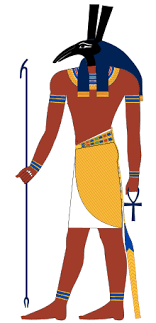
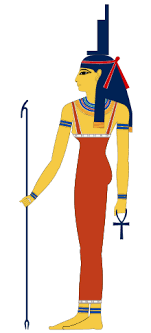
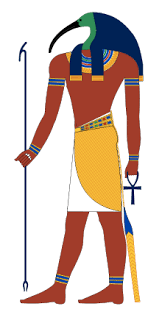
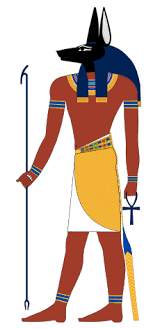
The Religion of Ancient Egypt was complex to say the least.  Three thousand years of additions, revisions, outside influences, and political policies made often drastic changes in name and responsibilities of many gods. Here is a small sampling of some of the more important gods of Egypt: Horus sky god-war god-protector god, symbol of Pharaoh as a living god on Earth-son of Isis-bitter enemy of Set; Set (Seth, Septh) god of chaos-evil-darkness brother of Osiris; Osiris god of the dead, ruler of the underworld; Isis-sister/wife of Osiris-goddess of motherhood, family, magic and later intelligence and beauty; Thoth-god of writing, he recorded the deeds of people used in the weighing of the heart; Anubis-god of embalming and guide of the dead-later judge of the dead


Weighing of the heart, Amat awaits the judgment and will consume the heart and soul of those who fail the test. Note the many ankh (religious symbol for eternal life) visible in both the print above and in hands of the gods.

Amun Ra (Ra, Amun, Amen, Amen Ra, Re, Amun Re) Was the last great god created by the Egyptians. Originally a version of the Sun god, Amun Ra eventually was proclaimed the "King of the Gods," so much so that the Ancient Greeks referred to him as Zeus.

Social Classes of Ancient Egypt

Pharaoh-Chief Priest King

High Officials-Royal Family, Administrators, Nobles, Court Officials, Priests, Scribes

Middle Class-Merchants

Working Class-Artisans, craftsmen, entertainers,peasant workers

Servants-freemen and Slaves all who worked for the above classes

Tiny Art-Big talent

Delicate Art thirty-Five Centuries Old


Pharaoh offering precious ointments to the gods.

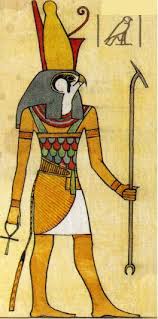
Horus, at first a sky god (hence the falcon image), eventually became one of the most important gods of the Egyptians, especially as a defender of good vs evil.

Bes offers protection over the young Horus as the latter control's crocodiles, snakes and other creatures. The carving is covered with spells of protection, water poured over it by priests became "Holy Water."

This beautiful and delicate vast is only 50 mm (2 inches) tall.
These tiny, glazed pieces are all less than 25mm (one inch) tall. The artful skill of the craftsmen that created these tiny works still amazes us more than 3500 years later.