In the early part of the Chinese Tang Dynasty, circa A.D. 670, Japanese scholars who had studied Chinese created a new name for their country using the Chinese phrase for “origin of the sun, sunrise,” because Japan is located east of China. In the Chinese of the time, the phrase was nzyet-pwun. To this the scholars added the Chinese suffix –kwuk, “country,” yielding a "nzyet-pwun-kwuk," “sun-origin-country, land of the rising sun.” The words were not pronounceable in Old Japanese, so the form was simplified to Nip-pon-gu. The form Nippon of today are the same as these, minus the “country” suffix. Japan is the early Mandarin word borrowed from the Malay Japang, which was encountered by Portuguese traders in Moluccas in the 16th century. These traders may have been the ones to bring the word to Europe; it is first recorded in English in 1577, spelled Giapan.
Wednesday, February 15, 2012
Origins of Nippon-Japan
In the early part of the Chinese Tang Dynasty, circa A.D. 670, Japanese scholars who had studied Chinese created a new name for their country using the Chinese phrase for “origin of the sun, sunrise,” because Japan is located east of China. In the Chinese of the time, the phrase was nzyet-pwun. To this the scholars added the Chinese suffix –kwuk, “country,” yielding a "nzyet-pwun-kwuk," “sun-origin-country, land of the rising sun.” The words were not pronounceable in Old Japanese, so the form was simplified to Nip-pon-gu. The form Nippon of today are the same as these, minus the “country” suffix. Japan is the early Mandarin word borrowed from the Malay Japang, which was encountered by Portuguese traders in Moluccas in the 16th century. These traders may have been the ones to bring the word to Europe; it is first recorded in English in 1577, spelled Giapan.

The Republic of Rome
The full government form of the Roman Republic was very complex-here is a brief description of the key features of pre-Imperial Rome:
The Roman Republic's power was shared. Here are the main offices of the Republic:
Consul(x2) - head of state
Dictator - appointed for 6 month in time of crisis
Pontifex Maximus - head of religion
Censor - in charge of public morality
Praetor - law officer
Aedile - in charge of public works
Quaestor - treasurer
Tribunes-had the power to veto laws of the Senate, Tribunes were elected by the Plebeians
The assemblies also controlled aspects of Roman life. These are the various assemblies:
Senate - patrician assembly
Comitia Curiatia - dealt with Roman life and religion
Comitia Centuriata - military assembly
Concilium Plebuis - plebeian assembly
Comitia Tributa - Tribal assembly

"The Roman Republic." The Roman Empire. Web. 11 May 2011. <http://www.roman-empire.net/republic/rep-index.html>.
The Roman Republic's power was shared. Here are the main offices of the Republic:
Consul(x2) - head of state
Dictator - appointed for 6 month in time of crisis
Pontifex Maximus - head of religion
Censor - in charge of public morality
Praetor - law officer
Aedile - in charge of public works
Quaestor - treasurer
Tribunes-had the power to veto laws of the Senate, Tribunes were elected by the Plebeians
The assemblies also controlled aspects of Roman life. These are the various assemblies:
Senate - patrician assembly
Comitia Curiatia - dealt with Roman life and religion
Comitia Centuriata - military assembly
Concilium Plebuis - plebeian assembly
Comitia Tributa - Tribal assembly
"The Roman Republic." The Roman Empire. Web. 11 May 2011. <http://www.roman-empire.net/republic/rep-index.html>.
Renaissance Fashion-through the Eyes of the Painter
<><>One of the great hallmarks of the Renaissance was the breakthrough in the realistic style of painting of portraits. All of the greatest artists of the day tried their hand at this lucrative work in the process creating some of the greatest and most famous art of all time.
</>
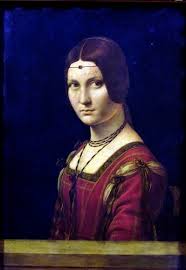
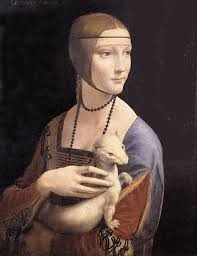 -da Vinci
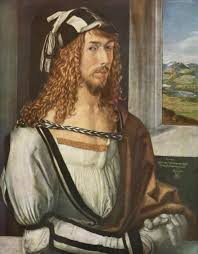 -Durer
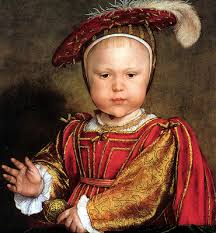 -Holbien-Raphael
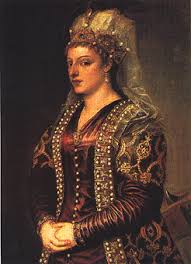 -Titian
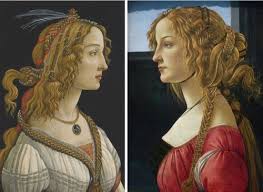 -Botticelli- "Simonetta Vespucci"; Titian- "Caterina
Cornaro"; Raphael- "Lady with a Unicorn," "Young Man with Apple," "The veiled
Woman"; Holbien- "Edward(VI) Prince of Wales"; Durer- "Young Venetian Woman,"
"Self Portrait at 26"; da Vinci- "Portrait of a Musician," "Lady with an Woman"
Ermine," "Portrait of a

|
Tuesday, February 14, 2012
Italian Renssiance-Begining the Modern World

Some time in the mid 14th century the Renaissance was born among the independent, and wealthy, city-states of Northern Italy. The combination of wealth, power and a renewed interest in the "Humanities" had set the foundation for the rebirth of knowledge that was the Renaissance.

Florence became one of the great centre's of art for this wondrous time with the likes of Leonardo da Vince and Michelangelo.


As time pasted the concepts of the Renaissance would spread throughout the Western World. The Middle Ages were dead, Europe would no longer be the backwater of World culture and technological advances (a position it had held in most areas since the fall of the Western Roman Empire). Each part of Europe would add their own twists and additions to the forever growing knowledge and changing culture. Europe and the World would never be the same, for the seeds planted in the Italian Renaissance would grow into the creation of the ever more advanced, complex and smaller World of today.
Thursday, February 2, 2012
Life in Egypt-through the eyes of the Artist
For thousands of years the artists of Ancient Egypt carved and painted the images of their world on walls, in tombs, on papyrus and everyday belongings. These beautiful works of art give a brief look into a World of luxury and pleasure of the wealthy as well as life and hard work of the common people.
Tribute from Nubia for the Pharaoh.

Taking funeral gifts to a tomb.

Women making final arraignments to their outfits before a party (note the perfumed wax on their wigs that will melt as the event proceeds and keep the women smelling sweet).

An unfinished work presenting women at their daily toilet.
A family hunting and food gathering.

Farming, the most common work of the people.
Tribute from Nubia for the Pharaoh.
Taking funeral gifts to a tomb.
Women making final arraignments to their outfits before a party (note the perfumed wax on their wigs that will melt as the event proceeds and keep the women smelling sweet).

An unfinished work presenting women at their daily toilet.
A family hunting and food gathering.
Farming, the most common work of the people.
Tuesday, January 31, 2012
The Cathedral Flying Buttresses

As Cathedrals got bigger, especially taller, a technique to strength the wall to hold the additional weight was needed. The builders of the Middle Ages came up with a unique design to meet this difficulty, the Flying Buttress.


Wednesday, January 11, 2012
Tutankhamun, the Boy King
The beautiful funeral mask of King Tutankhamun (King Tut) is one of the greatest surviving works of the Ancient Egyptian Goldsmiths. As he ruled circa 1341-1324 BCE, this mask is over 33 centuries old.

Subscribe to:
Posts (Atom)